Update March 3, 2026: The KP5 Team are now QRT from Desecheo, the last QSO being logged at 10:25:30 UTC 3rd March 2026.
Update March 1, 2026: At this time, the team has made over 104,000 contacts and worked more than 20,000 unique callsigns. We are very pleased with the performance of our operators and the reliability and efficiency of our fully solar-powered Remote Deployment Unit.
As we approach our scheduled QRT date of March 3rd, we would like to sincerely thank the worldwide Amateur Radio community and our generous sponsors for their outstanding support, and for making this groundbreaking low-power, fully solar-powered operation possible. We extend our deep appreciation to the U.S. Fish & Wildlife Service for working closely with us, granting permission for this activation, accompanying us to Desecheo, and allowing our equipment to remain on the island for nearly two months.
Tomorrow (Monday), we will eliminate the standard daily QRT window in order to maximize operating time. We will also reduce the overnight QRT time to keep the station on the air as much as possible.
Update February 26, 2026: Today, after 46 days of uninterrupted operation, we have reached a significant milestone: 100,000 QSOs Logged
This achievement represents more than a numerical benchmark. It marks several important firsts in DXpedition history:
• The first fully solar-powered major DXpedition to achieve 100,000 QSOs
• The first major DXpedition to reach 100,000 QSOs operating exclusively
low power
• A rare entity activation conducted under strict U.S. Fish & Wildlife
Service environmental regulations
• Continuous operation of a Remote Deployment Unit powered entirely by
solar energy and battery storage
• A focused operating strategy emphasizing All-Time New Ones (ATNOs)
By the Numbers (as of February 27, 2026 UTC)
• 100,000 Total QSOs
• 19,414 Unique Callsigns Worked
• 4,815 ATNOs Granted
• 177 DXCC Entities Logged
Averaged over the first 46 days, this represents approximately 2,170 QSOs per day using low-power, solar-only operation.
Update February 22, 2026: Weekly Mode Schedule Update
As we continue operations from Desecheo Island, the team has made a small adjustment to the weekly operating schedule to increase on air Availability.
Beginning with this week’s schedule, one of the planned QRT periods has been shortened by one hour. This change allows us to provide additional operating time focused on FT8 and CW, improving opportunities for stations worldwide who need KP5 for an ATNO.
Update February 20, 2026: KP5/NP3VI will be participating in the ARRL International DX Contest (CW) on February 21–22nd, 2026.
The contest begins at 0000 UTC Saturday, February 21st and concludes at 2400 UTC Sunday, February 22nd.
We will be operating in the Multi-Single category and will be looking to establish a new KP5 contest record.
During the contest, our second radio will remain in DXpedition mode to continue providing general operating opportunities outside the contest environment.
Contest operation is scheduled for 00:00–03:00 UTC and 17:00–00:00 UTC, aligned with propagation windows to North America and consistent with the power-management requirements of our fully solar-powered Remote Deployment Unit and vertical antenna systems.
As we can only work North America stations during the contest, we kindly ask stations outside of North America not to call us while we are operating in contest mode.
We look forward to working you in the contest. Listen for KP5 on the bands.
73, Steve N2AJ
Media Officer & Pilot
Desecheo DXpedition 2026
Update February 18, 2026:
-80,000 QSO MILESTONE -ONGOING ATNO FOCUS
-OPERATING ADJUSTMENT
-COUNTDOWN TO QRT — MARCH 3, 2026
Update February 15, 2026: ''We will be conducting an All Time New One Day for twelve hours, beginning Sunday, February 15, 2026 at 12:00 UTC and ending Monday, February 16, 2026, at 00:00 UTC. During this period, we will be focused on FT8 from 12:00–14:00 UTC, after which we will focus on SSB. Operation will be in the U.S. General portion of the bands.
We respectfully ask operators who do not need KP5 Desecheo Island for an ATNO to please refrain from calling us during this period."
Update February 12, 2026 @ 1145z: At this time we remain QRT while we await for the sun.
Forecast during peak sun hours is clear so let’s hope we can recharge as much as a possible to continue to operate
Update February 11, 2026: DXPEDITION EXTENDED:
We are pleased to announce an extension of the Desecheo DXpedition 2026 until Tuesday, March 3, 2026. The original recovery date was Thursday, February 12th, however deteriorating sea conditions have required us to delay equipment recovery until March 3rd.
As a result, the DXpedition will remain on the air longer, providing additional opportunities for operators to work Desecheo Island for an All Time New One (ATNO), which remains our primary focus. During the extension period, we will continue to operate on the bands and modes that have proven most effective and productive.
ATNO DAY:
We will be conducting an All Time New One Day for twelve hours, beginning Sunday, February 15, 2026 at 12:00 UTC and ending Monday, February 16, 2026 at 00:00 UTC. During this period, we will be focused on FT8 from 12:00–14:00 UTC, after which we will focus on SSB. Operation will be in the U.S. General portion of the bands.
We respectfully ask operators who do not need KP5 Desecheo Island for an ATNO to please refrain from calling us during this period. This will help maximize opportunities for those who still need this rare entity in their log.
STATISTICS:
Current statistics show 66,000+ QSOs, 14,771 unique callsigns, and 3,674 ATNOs.
Breakdown by continent:
NA 54.4%
EU 34.5%
AS 6.4%
SA 3.2%
OC 0.9%
AF 0.6%
—————
Please continue to monitor the Weekly Mode Schedule and livestream, as updates may occur based on real-time conditions.
The Desecheo DXpedition 2026 Team sincerely thanks the amateur radio community worldwide for its continued interest and support of this first-ever, fully solar-powered rare-entity DXpedition.
If you are enjoying this operation and would like to support future DXpeditions and the continued development of more effective Remote Deployment Units, donations may be made to the Manyana DX Foundation at https://manyanadx.org/dxp/
Please follow our progress on our website and Facebook page https://desecheo2026.com/kp5/
73, Steve N2AJ
Media Officer & Pilot
Desecheo DXpedition 2026
Update February 8, 2026 @ 1414z: At this time, we are QRT waiting for some sun to restart our operation.
Thank you for your patience and thank you for your support.
Update February 7, 2026: Updates to the Log on M0OXO OQRS, ClubLog, & LoTW have been made up to and including 17:01:00 7th February and Busted/Missing Call enquiries are up to date as of 18:50:00 (UTC) on 7th February 2026.
Charles, M0OXO
************************
To improve operational flexibility during the most challenging part of the day, we have adjusted the schedule so the 0000–0200 UTC block is no longer locked into a single mode. When phone conditions are poor or when SSB would consume disproportionate resources, operators now have the ability to shift modes quickly and keep the station productive rather than forcing a high-cost mode in marginal conditions. All other elements of the schedule remain unchanged, including the low-band approach that has proven beneficial for Europe around sunrise, while continuing to
prioritize bands and modes that are producing the highest number of uniques and All-Time New Ones (ATNOs).
As of this update, the expedition has logged 61,560 QSOs with 14,028 unique calls, 3,778 duplicate QSOs (6.14%), and has already delivered 3,500 New DXCCs (ATNOs) worldwide, resulting in strong overall award impact across bands and modes. Tactical adjustments will continue to be made to maximize global results within the constraints of a fully solar-powered operation.
The Desecheo DXpedition 2026 Team would like to sincerely thank all of you for your continued interest and support of this first-ever, fully solar-powered rare-entity DXpedition.
If you are enjoying this operation and are interested in supporting future DXpeditions and the continued development of more effective Remote Deployment Units, you may make a donation to the Manyana DX Foundation at: https://manyanadx.org/dxp/
Please follow our progress on our website and Facebook page: https://desecheo2026.com/kp5/
73,Steve, N2AJ
Media Officer & Pilot
Update February 6, 2026: Operation Progress
Operations continue to progress steadily as we move into the final stretch of the DXpedition.
As of this update, we have logged over 59,000 QSOs, with activity continuing at a strong pace. Based on current rates, we expect to cross the 60,000 QSO milestone by tomorrow evening, conditions permitting.
Schedule Update & Test Results
This morning we conducted a one-day test by shortening the morning QRT period from ending at 06:00 UTC to ending at 05:00 UTC, specifically to improve low-band opportunities for Eastern Europe and Scandinavia. Thanks to Martti OH2BH for his assistance during this test.
Based on the results, this earlier QRT schedule will be incorporated into next week’s Weekly Mode Schedule. During this period, we will also be substituting FT8 for CW to help generate more ATNOs.
In addition, we will be operating SSB at 00:00 UTC on 40m and 80m, as there is strong interest in SSB following substantial activity on CW and FT8.
Current Statistics Snapshot
Activity continues to be well distributed across regions and bands:
• North America: ~57% of total QSOs
• Europe: ~32% of total QSOs
• Asia: ~6%
• South America, Oceania & Africa: steady ongoing activity
We have now logged over 13,600 unique callsigns.
Award impact continues to be strong. Based on ClubLog’s expedition impact statistics, we have delivered approximately 3,414 New DXCC credits (ATNOs) so far. We have also made confirmed contacts with 135 DXCC entities to date.
High bands — particularly 10m — continue to perform exceptionally well and remain a major focus whenever propagation supports it.
Operating Conditions
Sunlight and weather remain the primary factors influencing operating time. With good sun, expect us to be on the air more. However, changing weather conditions may occasionally impact operating time, and adjustments will be made as needed.
Please continue to monitor the Weekly Mode Schedule and livestream, as updates may occur based on real-time conditions.
The Desecheo DXpedition 2026 Team would like to sincerely thank all of you for your continued interest and support of this first-ever, fully solar-powered rare-entity DXpedition.
If you are enjoying this operation and are interested in supporting future DXpeditions and the continued development of more effective Remote Deployment Units, you may make a donation to the Manyana DX Foundation at: https://manyanadx.org/dxp/
Please follow our progress on our website and Facebook page: https://desecheo2026.com/kp5/
73,Steve, N2AJ
Media Officer & Pilot
Update February 4, 2026: Yesterday we were able to operate some afternoon thanks to about 15% charge from the sun. We were able to operate some hours during the evening.
This is a current picture and cloud still over Desecheo. We will continue to pay close attention to the weather.
Tomorrow’s forecast is more promising.
Update February 3, 2026: We continue our QRT while we await for better sun so that we can recharge.
Let’s hope for better weather.
We apologize for the inconvenience.
Update February 2, 2026: At this time local weather is being affected by a cold front that is bringing rain and clouds to Desecheo during since yesterday.
In order to preserve energy, expect extended QRT times while we are under this weather conditions.
Once we get clear skies and better sun, we will resume operations
Thank you for understanding
Update February 1, 2026: New operating schedule.
Update January 28, 2026: A Remote, Solar-Powered DXpedition Is a Balancing Act
Operating a remote, solar-powered DXpedition is a constant balancing act.
Every operating decision requires us to carefully balance battery conservation, power consumption, and on-air effectiveness, while remaining focused on our primary objective: working as many All-Time New Ones (ATNOs) as possible, while still providing band and mode fills where conditions allow.
Unlike traditional DXpeditions, this operation is constrained by renewable power and strict environmental requirements. As a result, when propagation is favorable, we must often remain on the most productive bands and modes for extended periods of time. This approach maximizes total QSOs and gives stations with limited antennas or narrow propagation windows the best chance to complete a contact.
Current Status
As of today, the log exceeds 43,000 QSOs with more than 10,700 unique callsigns, spanning 123 DXCC entities. Activity continues across all major regions. Europe now accounts for nearly 28% of total QSOs, reflecting steady improvement following recent schedule and band adjustments. Recent CW and SSB activity into Europe has produced strong results, and we continue to receive encouraging feedback from operators who are now being worked successfully.
Digital modes remain an important tool for reaching weaker stations and difficult paths, while CW and SSB continue to play a key role in band coverage and regional focus when conditions permit.
Why This Balancing Act Matters
Two realities shape our operating strategy:
1. Available energy is finite and weather-dependent
2. There is no certainty that a return to Desecheo will be possible in the future
Because of this, our priority is to use favorable openings as efficiently as possible. Sustained operation on productive bands allows us to work first-time contacts, modest stations, and weak-signal DX, while higher power stations will naturally have opportunities to complete remaining band and mode needs as the operation progresses.
We understand that this requires patience, particularly for operators waiting on specific bands or modes. Experience has shown that disciplined operating early in a DXpedition ultimately benefits the greatest number of stations.
Operating Philosophy Going Forward
• Low power and efficiency remain essential
• Band and mode choices will continue to follow real-time propagation
• Adjustments will be made to reach under-served areas as conditions permit
• CW, SSB, and digital modes will all continue to be utilized
This DXpedition demonstrates that remote, renewable-energy operations can be effective, but they demand flexibility, understanding, and trust in the process.
We sincerely appreciate the patience, constructive feedback, and continued support from the amateur radio community worldwide. The team remains fully committed to making the most of every opening, every hour, and every watt.
We look forward to getting all of you in the log.
73, Steve N2AJ
Media Officer & Pilot
Desecheo DXpedition 2026
Update January 26, 2026: NEW DAILY MODE SCHEDULE CHART
We are pleased to share an updated operating schedule for the coming week. Our goal with this new time/mode chart is to make our operating pattern more predictable and to maximize pportunities for stations worldwide.

This revised schedule is designed to better cover both the European sunrise and European sunset windows, giving more operators a fair chance to work KP5 on multiple bands and modes.
We welcome your feedback and hope this adjustment helps get many more stations into the log.
73, Steve N2AJ
Media Officer & Pilot
Desecheo DXpedition 2026
Update January 23, 2026: CQWW 160m CW CONTEST
We will be participating in the upcoming CQWW 160m CW Contest. This operation will not be live-streamed. QSOs will be uploaded after the contest concludes.
We will be attempting to break the CQWW 160m CW record for KP5. This should not be too difficult since there has never been an entry from KP5.
OPERATING SCHEDULE ADJUSTMENT
We will maintain our current operating schedule with two important changes to better support Europe.
New QRT periods:
• Day QRT: 17:00 – 19:00 UTC
• Night QRT: 03:00 – 06:00 UTC
The night QRT period will keep us on the air for the European sunrise,improving our low-band propagation into Europe.
The day QRT period will allow us to remain on the air for the European sunset, giving us additional opportunities to work Europe on the higher bands.
STATISTICS UPDATE
We are now 11 days into the KP5 DXpedition, approximately one-third of the way through the operation.
Current log totals:
• Total QSOs: 29,418
• Unique callsigns: 8,291 (28.2%)
• New DXCC for: 1,966 stations
Six continents are represented in the log:
• North America – 66.6%
• Europe – 24.5%
• South America – 3.7%
• Asia – 3.6%
• Oceania – 1.1%
• Africa – 0.4%
North America contacts continue to decrease in percentage as we increase activity with other regions.
The Desecheo DXpedition 2026 Team would like to sincerely thank all of you for your continued interest and support of this first-ever, fully solar-powered rare-entity DXpedition.
If you are enjoying this operation and are interested in supporting future DXpeditions and the continued development of more effective Remote Deployment Units, you may make a donation to the Manyana DX Foundation
Please follow our progress on our website and Facebook page
73, Steve, N2AJ
Media Officer & Pilot
Desecheo DXpedition 2026
Update January 21, 2026: 6m OPENING SUCCESS
Last night’s 6-meter opening was nothing short of amazing. At one point we were running five simultaneous streams at only 25 watts — technically QRP — with outstanding results.
Many familiar calls made it into the log, and a great number of operators worldwide were very happy.
We now have over 574 QSOs on 6 meters in the log, and from our remote operating locations we remain ready in case another opening develops.
We would like to sincerely thank the many operators who sent 6-meter opening alerts by email and text to our Pilot, Steve N2AJ.
These alerts are extremely helpful and greatly improve our ability to take advantage of short openings. Please keep them coming.
FT8 OPERATING NOTES
When calling us on FT8, please always call with your grid square first.
Calls that begin with a signal report will be filtered out by the system and will not be answered.
Please also note that callsigns containing a forward slash ( / ) cannot be worked on FT8 in our current configuration.
WSJT-X version 2.6 does not support QSOs between two non-standard callsigns, and these calls will unfortunately be rejected automatically.
We hope these procedures will help complete more QSOs efficiently and reduce unnecessary retries.
LOGGING INQUIRIES
Please submit all logging inquiries using the Missing QSO report form on the M0OXO.com/oqrs/logsearch.php" target="_blank">M0OXO Bespoke OQRS system. This is the fastest and most efficient way to have your inquiry resolved. Email inquiries are discouraged, as they significantly delay resolution.
LOG STATUS & RATE
We have now passed 23,600 QSOs in the log, with daily rates continuing to improve.
We are also seeing a steady flow of new uniques.
We thank the Ham Radio community for their support and hope to get many more of you in the log.
73, Steve N2AJ
Media Officer & Pilot
Desecheo DXpedition 2026
Update January 19, 2026: For the next week, we will be operating using a mode-based schedule to improve efficiency, increase our QSO rate, and provide a more predictable operating pattern for those trying to work KP5/NP3VI.
This pattern will repeat daily, beginning at 00:00 UTC. We will follow this pattern for this week completely. Please note that these plans may be subject to change based on solar conditions and operator recommendations. When possible, we will try to operate on the same bands to allow more stations to work Desecheo as uniques.
00:00–04:00 UTC — CW
CW operations to start the day.
04:00–05:00 UTC — CW (tonight) / FT8 or CW
Mode may vary depending on conditions.
06:00–09:00 UTC — QRT
Scheduled downtime.
09:00–12:00 UTC — FT8
Dedicated FT8 operations.
12:00–16:00 UTC — CW to Europe (higher bands)
Targeting EU propagation during this window.
16:00–18:00 UTC — QRT
Planned downtime during solar maximum to allow for battery recharging.
18:00–20:00 UTC — SSB (Phone)
20:00–24:00 UTC — FT8
FT8 operations to finish the day.
Power and Capacity Notes:
If propagation and solar charging conditions are favorable, we expect to be able to operate two FT8 radios simultaneously during FT8 periods.
This operating pattern is expected to remain in place for the next week.
We appreciate feedback from the DX community and will make adjustments as needed based on results and conditions.
Milestone Update:
We are approaching 18,000 QSOs in the log. Thank you to everyone worldwide for your patience, support, and continued interest in the Desecheo activation.
73, Steve N2AJ
Media Officer & Pilot
Desecheo DXpedition 2026
For more information, and to see our live station telemetry, visit our website
Update January 18, 2026: Today’s forecast is for bight sun. Please QRX while we charge our batteries.. here comes
Big Sun!!
Update January 16, 2026: Day Four Progress Report
We’ve reached an exciting early milestone — more than 10,000 QSOs logged just four days into the Desecheo DXpedition 2026. This strong start confirms that the team’s innovative remote-deployment approach is working well and that global interest remains exceptionally high.
Worldwide Activity
Contacts have already been logged from every continent, with especially strong early activity from North America and Europe. Asia, South America, Oceania, and Africa are also well represented in the log, and as propagation continues to improve, we expect even broader global coverage in the days ahead.
Power & Solar Performance
Power management continues to perform better than anticipated. Battery levels remained stable overnight, and solar charging began slightly earlier than the previous day, an encouraging sign that daylight conditions are improving. As the expedition progresses, increasing solar efficiency should allow for more consistent and sustained operating periods.
Telemetry has been fully restored, giving the team excellent visibility into system performance and power reserves as the operation continues.
Early Propagation Insights
Early-morning operations produced some valuable propagation insights.
Activity on 40 meters toward Japan proved particularly effective, with reports indicating that local morning conditions are currently outperforming local sunset on that path. These early findings help the team fine-tune band and time-of-day strategies to maximize global reach.
First 6-Meter Contact
Another milestone was achieved with the first 6-meter QSOs of the expedition. While 6 meters remains highly dependent on short-lived propagation openings, the early success confirms that the station is well positioned to take advantage of favorable conditions whenever they appear. If there is a 6-meter opening to the Caribbean, please let us know.
Band Performance Snapshot
Current band trends show that 15m, 17m, and 20m are outperforming higher bands at this stage of the expedition. This is not unusual early in a long-duration operation, and conditions are expected to evolve as solar and propagation patterns continue to change.
SSB Testing Underway
Today marks the expedition’s SSB test day, an important step in evaluating erformance across multiple modes. Results from these tests will help shape a more regular and predictable operating rhythm going forward, allowing the team to balance efficiency with broad mode and band coverage.
Looking Ahead
With the initial deployment phase now behind us, the operation is entering a more stable and predictable period. The focus in the coming weeks will be on steadily increasing the QSO rate, expanding geographic reach, and maintaining reliable long-term operation.
The ultimate goal remains ambitious — 100,000 QSOs — and the strong early pace suggests that target is well within reach.
Thank you to everyone around the world who has already worked Desecheo,spotted the station, and helped spread the word. This historic DXpedition is just getting started.
73,Steve N2AJ
Media Officer & Pilot
Desecheo DXpedition 2026
Update January 15, 2026: Steady Progress As Testing Continues
As we continue system and battery testing, operations are settling into a more normal and consistent pattern.
This morning we focused on Europe on the higher bands. As of 22:00 UTC, we have been active on 10m, 12m, 17m, 20m, and 30m. You can expect our signal to remain on the air continuously overnight, with no planned breaks, carrying straight through into tomorrow morning.
Looking ahead, SSB testing is planned for tomorrow, as we continue validating system performance across modes and bands.
Thank you for your patience and continued support as testing progresses.
About Desecheo Island
Desecheo Island is a small, rugged, uninhabited island located in the Mona Passage off the west coast of Puerto Rico, known for its dramatic cliffs, dry subtropical forest, and surrounding coral reefs. Once used for military training, the island has since been the focus of major environmental restoration efforts, including the successful removal of invasive species that allowed native plants and wildlife to recover. Today, Desecheo is a protected nature reserve, home to seabird colonies, lizards, and rich marine life, and it is internationally recognized by amateur radio operators as one of the world’s most sought-after DX locations due to its rare status and strict access limitations.
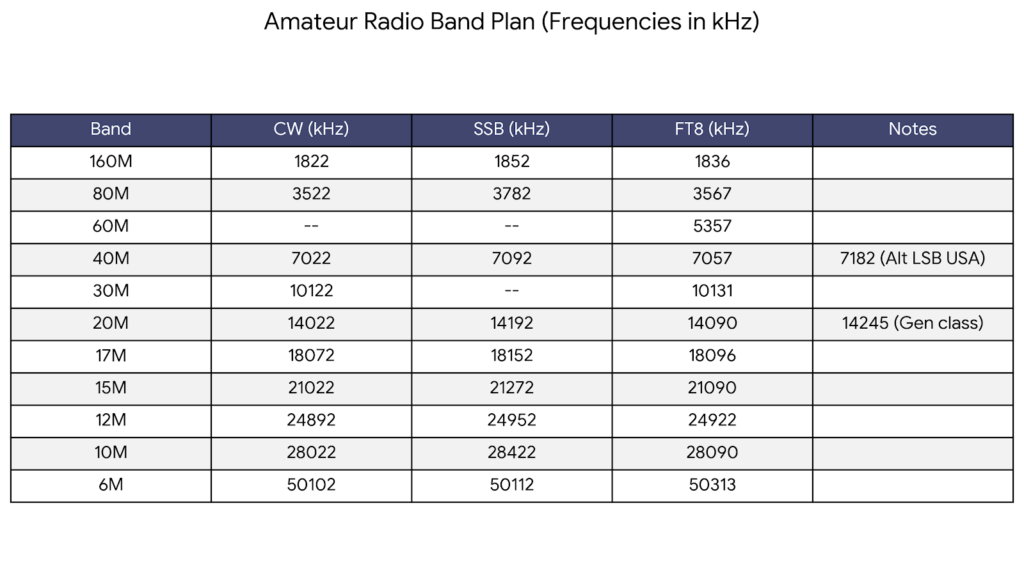
CW & SSB ALWAYS UP
FT8 ALWAYS MSHV. NEVER F/H.
QSL via M0OXO
Please use OQRS to request your Direct or Bureau Cards. Please do not send us your card via the Bureau as they are not required. Please ensure you select the 2026 log for KP5/NP3VI on the M0OXO Website.
If your QSO is not in the log, please use the Missing QSO form on OQRS to report it. This is for your convenience and is the fastest way to get your enquiry resolved. Please do not send QSO or log queries to team members.
OQRS Link: M0OXO.com/oqrs/" target="_blank">https://www.M0OXO.com/oqrs/
Email: charles.wilmott@M0OXO.com
Update January 14, 2026: Adjustments Being Made To Systems
Please be patient—this is only Day Two of a planned 30-day activation. This DXpedition represents a completely new operating concept designed specifically for environmentally sensitive, highly regulated, and restricted locations. As with any first-of-its-kind effort, refinements are ongoing.
Our team leaders, along with electrical and software engineers, are actively fine-tuning operating schedules, band and mode selection, RF power levels, and overall system performance to optimize results as conditions evolve.
Due to Desecheo’s geographic location, North American stations are currently dominating propagation. That said, our operators have been explicitly instructed to listen for DX stations and to give them priority whenever possible in order to broaden log coverage. We ask for your patience as we work through the pileups and strive to put as many stations as possible into the log.
A primary goal of this DXpedition is to deliver as many ATNOs as we can worldwide. Thank you for your understanding, your support, and your cooperation.
Good luck in the pileups—and we’ll see you in the log!
73, Steve N2AJ
Media Officer & Pilot
Desecheo DXpedition 2026
Update January 14, 2026: Station Deployment On Desecheo Island
On Monday, January 12, 2026 the Desecheo DXpedition Deployment Team successfully completed the installation of both Remote Deployment Units (RDU’s) on Desecheo Island. The RDU’s, solar arrays, battery systems, antennas, Starlink internet terminal, and monitoring equipment are now fully deployed and operational. All work was carried out efficiently and in strict compliance with U.S. Fish & Wildlife Service requirements, ensuring an environmentally responsible operation. With the infrastructure in place, the team departed the island and returned safely to the mainland, marking a major milestone for the project and the beginning of something new. Desecheo DXpedition 2026 will change how DXpeditions can be conducted at environmentally sensitive locations now and for
the future.
73, Steve N2AJ
Media Officer & Pilot
Desecheo DXpedition 2026
Update January 13, 2026: We want to let the DX community know that we are temporarily off the air for scheduled system maintenance.
First and foremost, we apologize for the brief disruption. This maintenance is part of fine-tuning and making adjustments to ensure the system continues to perform at its very best. Last night, we intentionally pushed the system to its limits to fully understand its capabilities—and the results were very encouraging. The system performed extremely well, resulting in a high volume of completed QSOs.
At this time, we are making final refinements based on what we learned during that high-load testing. We expect to be back on the air shortly.
Thank you for your patience, understanding, and continued support. Your enthusiasm and participation mean a great deal to the entire team, and we look forward to working you again very soon,
Steve, N2AJ
Update January 13, 2026: They are QRV on different bands and modes. So far more than 3,000 QSOs in the log. ClubLog's Livestream is active.
Update January 12, 2026: Early morning local time in KP4, a RIB left the mainland headed to KP5 with all the equipment needed to make this activation a reality.
Update January 11, 2026: Final Preparations
Final preparations are now being made for the Desecheo DXpedition 2026, and the team is hard at work at the home of Ken KP4AA, completing last-minute work ahead of deployment.Tomorrow — Monday, January 12, 2026 — the team departs for Desecheo Island.
Antennas and station equipment are being tuned, tested, and finalized. The power system has also received a major upgrade. The number of solar panels has been increased from eight to twelve, and new support legs are being added to the arrays to provide better orientation toward the sun. This will significantly improve battery charging capability and overall station reliability once the systems are deployed on the island.
Operating Information
• Callsign: KP5/NP3VI
• QSL: via M0OXO
• QSL info & band plan: available on our website and QRZ page
• Live activity: We plan to use the ClubLog Livestream feature
Band Plan Update:
There is one change to report. Unfortunately, there will be no 160m operation. Despite multiple attempts, the antenna could not be successfully tuned for 160 meters.
6m Operators — We Need Your Help!
Please report 6m openings into the Desecheo area directly to Team Pilot Steve N2AJ via his QRZ email address. With two stations operating, the team will attempt to QSY to 6m whenever openings occur.
Visit our website
Stay tuned — the adventure is about to begin, and more updates will be coming soon directly from Desecheo Island!
Steve, N2AJ
Media Officer & Pilot
Desecheo DXpedition 2026
Update January 10, 2026: Press Release #4
The Desecheo DXpedition 2026 team is proud to highlight an important behind-the-scenes partnership that is helping redefine how modern DXpeditions are planned and executed. In collaboration with the Manyana DX Foundation, the team will deploy two advanced Remote Deployment Units (RDUs)—purpose-built, self-contained radio systems designed specifically for challenging and environmentally sensitive locations like Desecheo Island.
The Manyana RDU is best described as a DXpedition-in-a-box. Each unit integrates power management, remote radio control, and environmental monitoring into a rugged, transportable platform that can be deployed quickly and operated continuously. Designed for reliability and resilience, the RDU concept allows stations to remain on the air even when access is limited, weather conditions deteriorate, or personnel must be off-site. For KP5, this approach significantly improves both operational safety and on-air consistency.
A key innovation of the RDU system is its emphasis on real-time station awareness. Telemetry provides continuous insight into battery state-of-charge, solar input and voltage, temperature and humidity inside equipment enclosures, and overall radio status. This level of visibility allows the team to proactively manage power, heat, and moisture—critical factors for long-duration island operations—reducing downtime and max imizing QSO opportunities.
The RDUs will be integrated with remote operating infrastructure provided by Remote Ham Radio, enabling qualified operators around the world to safely operate KP5 stations across multiple time zones. This hybrid model—combining on-island deployment with global remote operation— supports the team’s goal of maintaining near-continuous, 24/7 activity throughout the expedition while preserving the fragile environment of Desecheo.
The Desecheo DXpedition 2026 team extends its sincere thanks to Manyana and the engineers and volunteers who continue to push innovation forward in support of DXing. The RDU program represents not just new equipment, but a new way of thinking about how rare entities can be activated more safely, more efficiently, and more effectively than ever before.
More updates coming soon as we continue to spotlight the people, technology, and planning behind KP5.
Stay tuned for more updates.
73, Steve N2AJ
Media Officer & Pilot
Desecheo DXpedition 2026
Update December 30, 2025: Press Release #3
The Desecheo 2026 team is happy to report that we are making progress. We should be QRV in two weeks.
Today the KP4ES test station went QRT around mid day local time. The station was removed from the practice site and was taken to KP4AA to begin the cleaning process. This cleaning is required as part of the Bio Security Protocol prior to going to Desecheo.
Operators will still be practicing using the KP4ES callsign but operating through the KP3H Super Station. Your contacts with KP4ES have helped our team to practice and prepare for the upcoming pileups while providing you with an opportunity to practice prior to our main event. We appreciate the help of the Dx Community.
Our website has been uploaded with Propagation forecasts from VOACAP. You can use this information to help you take advantage of propagation opportunities. Thanks to Jari OPH6BG for his contribution.
The deployment team will meet again on January 9th for final preparations prior to our deployment window of January 12-14. Lets pray for some good weather.
Stay tuned to more updates.
Update December 26, 2025: The Desecheo 2026 DXpedition team is proud to announce the official operational dates for the 2026 expedition.
At this stage, the expedition equipment has been fully deployed and is undergoing extensive testing at the KP4AA Contest Station in Cabo Rojo, Puerto Rico. This QTH is located on a hill overlooking the Caribbean Sea and sits just under 30 miles from Desecheo Island. The purpose of this deployment is to stress-test the complete system under real-world
conditions to ensure maximum reliability and on-air time during the actual DXpedition.
The station is currently operating using the KP4ES callsign. Signal characteristics should closely resemble what the DX community can expect from Desecheo. We encourage DXers worldwide to look for KP4ES on the bands and help our remote operators gain experience managing large pileups and long operating schedules.
The station will remain on the air until Monday, December 29, at which time the team will disassemble the equipment, perform a thorough cleaning, and prepare it to comply with the strict biosecurity protocols required prior to transportation to Desecheo Island. Following this, remote operator training will continue using the KP4ES station from the KP4 Palmas RHR station (KP3H Super Station) in Puerto Rico.
Please work KP4ES and help us prepare for the major pileups expected during the DXpedition.
The team will reconvene on January 9 at the KP4AA Contest Station to finalize preparations for the deployment window of January 12–14, 2026, weather permitting. Once deployed, the DXpedition is expected to remain QRV for approximately 30 days, until the scheduled recovery date.
The Desecheo 2026 team would like to sincerely thank NCDXF and INDEXA for their generous support.
Stay tuned for additional updates on our website www.desecheo2026.com and in our official Facebook group.
73, Steve, N2AJ
Media Officer & Pilot
In collaboration with the Vieques Island Amateur Radio Club (NP3VI) and the Manyana DX Foundation, we are proud to announce a landmark Dxpedition to Desecheo Island (KP5), currently ranked as the 14th most wanted DXCC entity worldwide.
Located approximately 13 miles off the west coast of Puerto Rico, Desecheo Island has not been activated since 2009. This operation represents the first Puerto Rican–led Dxpedition to Desecheo in 48 years, following the historic KP4AM/D activation in 1978.
To ensure continuous, global on-air presence, two self-sustained Remote Deployable Units (RDUs) provided by the Manyana DX Foundation will be deployed on the island. These stations will operate 24 hours a day for 30 consecutive days, utilizing state-of-the-art remote operating infrastructure from Remote Ham Radio (RHR).
The primary mission of this Dxpedition is to provide an All-Time New One (ATNO) to as many amateur radio operators worldwide as possible. Operators from Puerto Rico and international locations will participate to maximize coverage, band availability, and global accessibility.
Dxpedition highlights include:
• 30 days of continuous operation
• Livestreaming and real-time activity updates via ClubLog
For the latest news, photos, operational updates, and activation schedules, please visit our official website and follow us on Facebook.
73, Otis, NP4G
Team Leader
|
 DX news and calendar: KP5/NP3VI




 Home page
 Site map
 Radio Sherlock search engine
 Terms of service
 Privacy
 Cookies